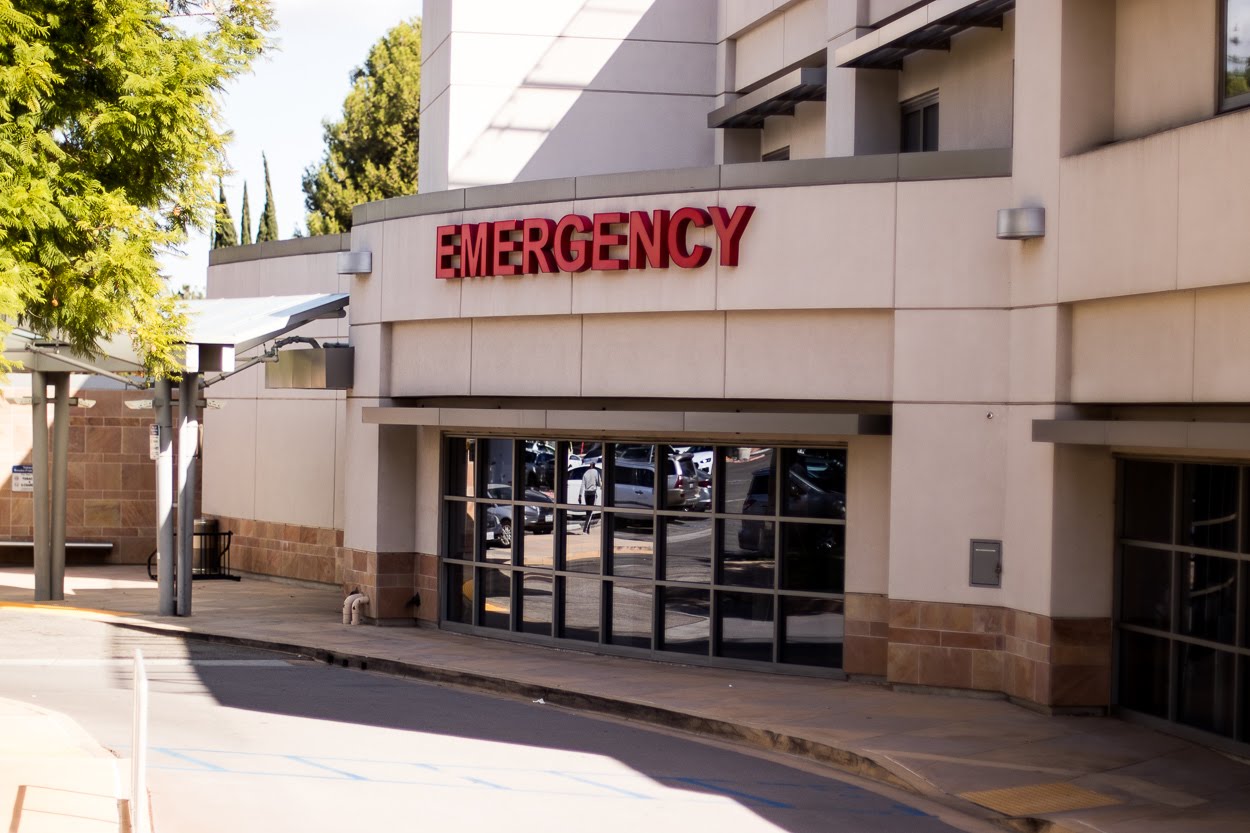
A parking lot accident claim in Tennessee may involve more than one defendant. Both the driver who struck you and the business responsible for the lot’s design or maintenance may share liability. Determining who is responsible, and for what, is central to these cases.
Most people leave a parking lot collision assuming the claim is against the other driver. Sometimes that is right, and often it is incomplete.
A lot is a designed environment. Its layout, sight lines, signage, lighting, surface condition, and traffic flow are decisions someone made. When those decisions create an unreasonable hazard, the owner or occupier may share responsibility for an injury. Similar premises liability questions arise in other property injury cases, including those handled by a slip and fall lawyer in Kingsport.
That does not make the property owner responsible for every collision on its land. It means the question is worth asking rather than assuming away.
Tennessee has largely abolished joint and several liability. Under Tenn. Code Ann. § 29-11-107, each defendant is generally liable only for its own percentage of fault, rather than for the whole. Joint liability survives only in the narrow circumstances the statute preserves.
Fault can also be allocated to a nonparty, meaning someone who is not a defendant in the case. Tennessee courts have recognized this since Carroll v. Whitney, 29 S.W.3d 14 (Tenn. 2000), and defendants must raise it in their pleadings under Tenn. R. Civ. P. 8.03. A driver may point at the business, and a business may point at a driver who was never sued.
The practical effect for an injured person is that identifying every responsible party is not thoroughness for its own sake. Where a share is allocated to someone absent or uninsured, that portion is generally not made up by the others.
There is one important safeguard. When a defendant names a nonparty as at fault, Tenn. Code Ann. § 20-1-119 may give the injured person a limited window, generally 90 days, to bring that party into the case, even if the ordinary filing deadline has passed. The rule has conditions, so do not treat it as a substitute for acting early.
A business open to the public owes a duty of reasonable care regarding conditions on its premises. Where the claim rests on a physical hazard, the injured person generally must show that the owner had notice of the condition. That means either actual notice or constructive notice, meaning the owner reasonably should have known.
Notice is not always required. Under Blair v. West Town Mall, 130 S.W.3d 761 (Tenn. 2004), notice is not needed where the owner or its agents created the condition. It is also not needed where the condition results from a pattern of conduct or a recurring incident that made the hazard reasonably foreseeable. Because layout, signage, and traffic flow are often choices the owner made, this can matter a great deal in parking lot cases.
For a lot, the conditions that recur include:
These issues can raise broader questions about a property owner's duty to maintain reasonably safe premises. A premises liability lawyer in Kingsport can explain how those duties may apply to an injury involving unsafe property conditions.
Comparative fault applies here as it does everywhere else, and an insurer will look for a percentage to attach to you. Reversing without looking, walking between vehicles, phone use, and speed within the lot are the usual arguments. Insurers and property owners may also argue that a hazard was open and obvious, which Tennessee courts treat as a factor in allocating fault rather than a complete bar. See Coln v. City of Savannah, 966 S.W.2d 34 (Tenn. 1998).
Under Tennessee law, an injured person recovers only if their own share of fault is less than fifty percent, and below that line the award is reduced proportionally. That bar is common law, established in McIntyre v. Balentine, 833 S.W.2d 52 (Tenn. 1992), rather than a product of the apportionment statute.
An adjuster's percentage is an opening position and not a finding. Fault is allocated by the trier of fact.
US-11W, known locally as Stone Drive, is Kingsport's dominant commercial arterial, with long stretches of retail frontage and constant turning movements in and out of businesses. The lots along it absorb a high volume of vehicles entering and leaving all day.
Fort Henry Drive adds a similar mix of retail and commuter traffic. The John B. Dennis Highway functions as a limited access loop, which means drivers move between high-speed conditions and crowded commercial lots within a short distance.
That transition is where a lot of these incidents originate. A driver arriving from a fast arterial is adjusting to an environment with pedestrians, reversing vehicles, and unmarked conflicts, and the adjustment is not always complete.
Parking lot claims turn on conditions that are easy to fix and easy to forget. The most useful record is made on the day.
Worth capturing:
Ask specifically whether the lot is covered by cameras and who holds the footage. Retail systems commonly overwrite within days, and a request made a month later frequently arrives too late.
| Potential defendant | What has to be shown |
| The other driver | Negligent operation of the vehicle causing the collision. |
| The property owner or occupier | A hazardous condition, plus actual or constructive notice of it. |
| A nonparty | Fault may be allocated to them under Tenn. Code Ann. 29-11-107(d), though they pay nothing. |
Can You Hold a Property Owner Liable for a Parking Lot Accident in Tennessee?
Yes. A property owner may be liable if unsafe lot conditions or design contributed to the accident and the owner knew or reasonably should have known about the hazard.
If Several Parties Are at Fault, Does One of Them Pay Everything?
Generally no. Under Tenn. Code Ann. 29-11-107, each defendant is severally liable only for its own percentage of fault.
Does being partly at fault end my claim?
Only at fifty percent or above. Below that line, recovery is reduced by the percentage allocated, under McIntyre v. Balentine.
The driver may not be the only party responsible for a parking lot accident. Unsafe design, poor lighting, or neglected maintenance may also contribute, making it important to document the lot’s condition before it changes.
Fox & Farmer offers free consultations and handles injury cases with no fee unless you win. To discuss your situation, call (423) 390-0000 or visit the firm’s contact page.
Last reviewed: October 2026
This post was reviewed by Alexander W. Gothard, licensed in Tennessee since 1996.
Content is provided for informational purposes only and does not constitute legal advice. Consult a licensed Tennessee attorney for guidance specific to your situation.
A pedestrian accident on Cumberland Avenue in Knoxville may involve more than one at-fault party....

If you've been in a car accident or motorcycle accident and are starting the legal...

Under Tennessee Code section 55-9-604, a driver or passenger's failure to wear a safety belt...