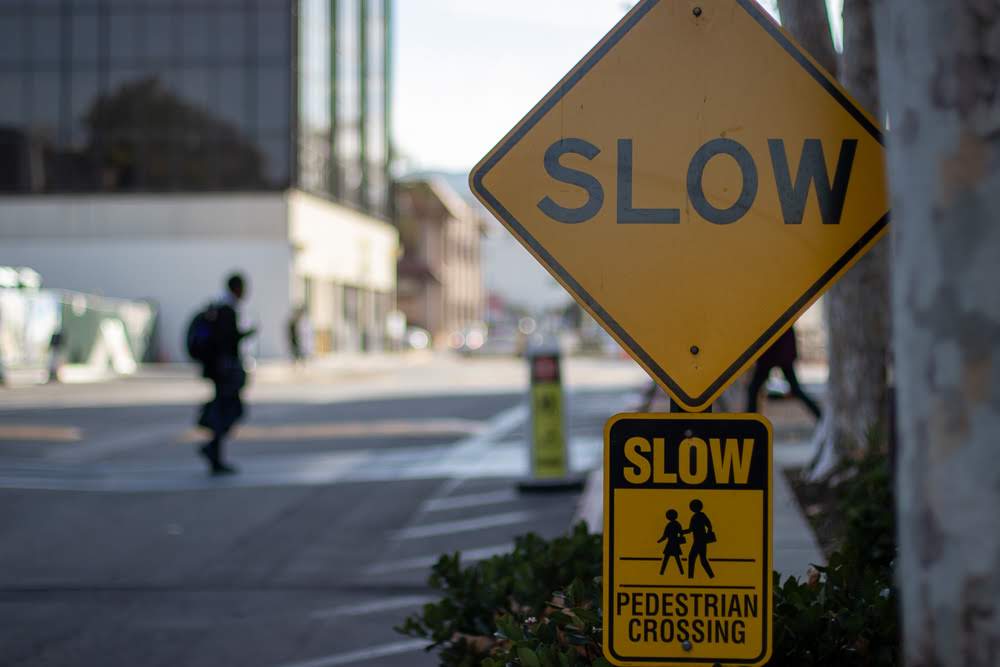
A pedestrian accident on Cumberland Avenue in Knoxville may involve more than one at-fault party. Tennessee generally assigns each defendant responsibility for its share of the fault, and a defendant can also point to people who aren’t in the case at all. Both rules can reduce what an injured person recovers, and a one-year filing deadline makes it important to identify every responsible party quickly.
Cumberland Avenue, known as the Strip, runs along the University of Tennessee campus and combines heavy pedestrian traffic, scooters, delivery vehicles, on-street parking, and late-night activity in a compact corridor.
Pedestrians cross frequently, while drivers may be focused on finding parking rather than watching the road. Nearby streets carry similar foot traffic, including after dark when visibility can be limited.
Tennessee generally follows several liability rather than joint liability. Under Tenn. Code Ann. § 29-11-107, each liable defendant is responsible only for its assigned percentage of fault, rather than the entire judgment.
Exceptions remain, including certain civil conspiracy and product liability claims. Vicarious liability also works differently. When a driver was working at the time of the crash, the employer can be held responsible for the driver’s share, so the employer is not a separate slice of fault.
Outside those exceptions, if a defendant cannot pay its assigned share, the remaining defendants are not automatically responsible for the shortfall. That makes it important to identify every potentially liable and insured party.
Tennessee allows a defendant to argue that some fault belongs to a nonparty, meaning someone who is not a defendant in the case. The leading case is Carroll v. Whitney, and Tenn. R. Civ. P. 8.03 requires the defendant to plead nonparty fault as an affirmative defense and identify the person.
A defendant may point to a scooter operator, another motorist, or a business whose vehicle obstructed visibility. Because a nonparty pays nothing toward the judgment, assigning fault to that person reduces what the defendants owe. It can also affect whether the injured person can recover at all, because the plaintiff’s fault is compared against the defendants’ fault. Fault placed on an empty chair shrinks the defendants’ side of that comparison.
Tennessee gives injured people a limited response. If a defendant names a nonparty, Tenn. Code Ann. § 20-1-119 generally gives the plaintiff a short window, 90 days from the answer or amended answer, to add that person as a defendant, even if the one-year statute of limitations has otherwise run. The rules are technical, so the earlier a nonparty is identified, the better.
The driver who struck the pedestrian is the obvious defendant and often not the only one. Depending on the facts, the parties worth investigating include:
Bicycle riders can also face unique liability issues when a collision involves a motor vehicle or another party. A Knoxville bicycle accident lawyer can provide more information about potential claims involving cyclists.
Comparative fault applies to pedestrians as it does to drivers, and an insurer will look for a percentage to attach. Crossing outside a marked crossing, phone use, dark clothing, and alcohol are the arguments that appear most often on this corridor.
Under McIntyre v. Balentine, 833 S.W.2d 52 (Tenn. 1992), an injured person can recover only if their own fault is less than the fault of the defendants. Where there are several defendants, the plaintiff’s fault is compared with their combined fault, and any award is reduced by the plaintiff’s percentage.
In a simple two-party case, this works out to “under fifty percent,” but fault assigned to a nonparty changes the math. For example, if a pedestrian is found 40% at fault, the driver 30%, and a nonparty 30%, the pedestrian may be barred even though their share is under 50%.
This rule comes from common law, while the apportionment statute governs how fault is divided among defendants and says nothing about barring a claimant.
An adjuster's percentage is a negotiating position. Fault is allocated by the trier of fact, and the figure offered in the first phone call rarely survives contact with the physical evidence. For more information about pedestrian claims in the Knoxville area, a Knoxville pedestrian accident lawyer can explain how fault may affect recovery.
A busy commercial and campus corridor can generate valuable evidence, but some of it may disappear quickly. Business and campus cameras may overwrite footage within days, making timely preservation important.
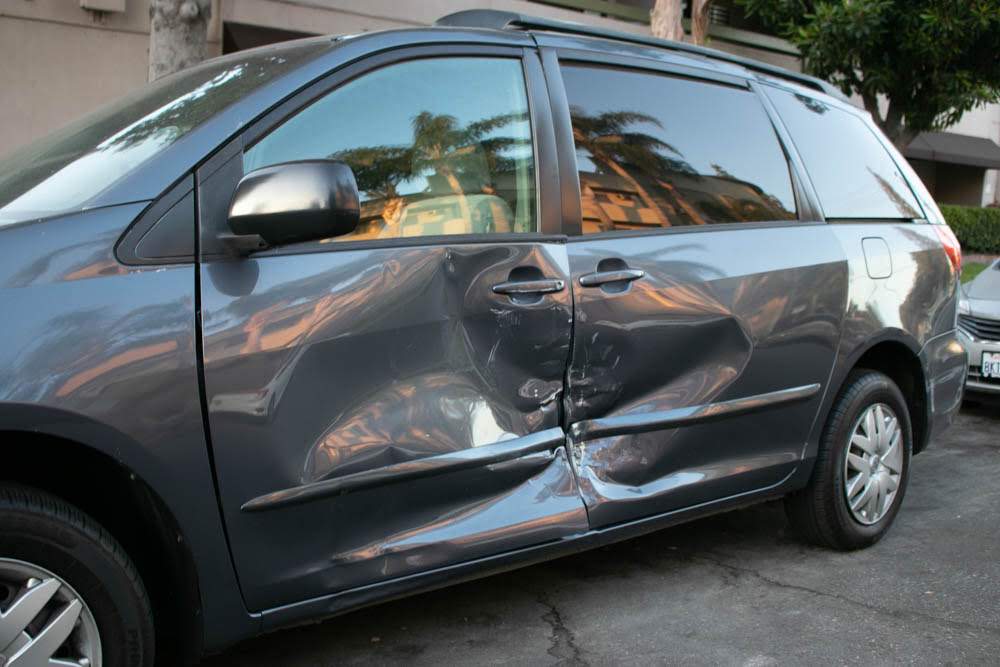
Other useful evidence can include the crash report, independent witnesses, lighting and sight-line conditions, and vehicle damage showing the speed or angle of the collision.
Physical evidence can be especially persuasive when it conflicts with a driver's account. Damage patterns may provide a clearer picture of what happened than either person's version alone.
| Effect under Tennessee law | Authority | |
| Fault allocated to the injured person | Reduced proportionally below fifty percent, and no recovery at fifty percent or above. | McIntyre v. Balentine, 833 S.W.2d 52 (Tenn. 1992). |
| Fault allocated to a defendant | That defendant is severally liable for its own percentage only. | Tenn. Code Ann. 29-11-107. |
| Fault allocated to a nonparty | Reduces the share the defendants pay, and the nonparty pays nothing. | Tenn. Code Ann. 29-11-107(d). |
Who Can Be Sued After a Pedestrian Accident on Cumberland Avenue in Knoxville?
The driver is the obvious defendant, but another motorist, a business, a scooter operator, an employer, or a property owner may also have contributed and carry their own insurance.
If one defendant cannot pay, do the others cover it?
Generally no. Under Tenn. Code Ann. 29-11-107, each defendant is severally liable only for its own percentage of fault.
Can fault be blamed on someone who was never sued?
Yes. Tenn. Code Ann. 29-11-107(d) allows fault to be allocated to a nonparty, which reduces the share the remaining defendants are required to pay.
When each defendant is responsible for its own share of fault, identifying all potentially liable parties can directly affect recovery.
Fox & Farmer offers free consultations. To learn more or discuss your situation, call 865-531-9400 or visit the firm’s contact page.
Last reviewed: October 2026
This post was reviewed by Bradley A. Farmer, licensed in Tennessee since 1994.
Content is provided for informational purposes only and does not constitute legal advice. Consult a licensed Tennessee attorney for guidance specific to your situation.

You are fighting a personal injury claim and have been asked to provide a deposition....
Living in Chattanooga or being taken to a Tennessee hospital doesn't automatically mean Tennessee law...

Tennessee’s noneconomic damage cap, outlined in Tennessee Code Annotated § 29‑39‑102, limits recovery for intangible...