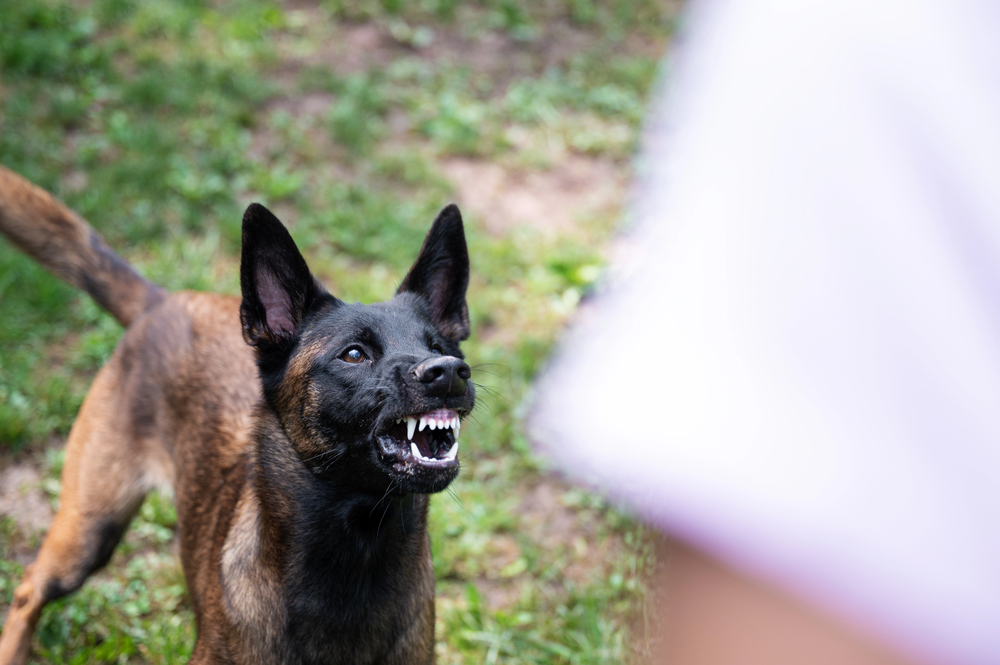
Tennessee applies strict liability when a dog injures someone in a public space or while lawfully on third-party private property. However, if that same bite occurs on the owner’s own residential property, the law shifts to a much higher legal threshold requiring proof of prior knowledge.
These cases may have different statutory frameworks. A competent legal team can assist those who have been affected in determining their claims.
The Dianna Acklen Act of 2007 governs the claim. Subsection (a)(1) places a duty on a dog's owner to keep the dog under reasonable control at all times and to keep it from running at large, and a breach of that duty creates civil liability to a person injured in a public place or lawfully on another person's private property.
Subsection (a)(2) is what makes this the strict liability track. The owner may be held liable regardless of whether the dog had shown any dangerous propensities and regardless of whether the owner knew or should have known of them.
The statute defines the term rather than leaving it to argument. Under subsection (e)(2), a dog is running at large when it goes uncontrolled by its owner onto the premises of another without the consent of the person entitled to give it, or uncontrolled onto a highway, public road, street, or any other place open to the public generally.
That definition does useful work in a residential neighborhood. A dog that crosses from its own garden into yours, or into the street, has satisfied the definition even if it travelled only a short distance.
Subsection (c)(1) introduces a key exception: if the injury occurs on residential, farm, or noncommercial property owned, leased, or lawfully occupied by the dog's owner, the injured person must prove the owner knew or should have known of the dog's dangerous propensities (the traditional "one-bite rule").
Subsection (c)(2) means proving the owner knew about the dog isn't enough on its own; the claimant still has to meet the usual negligence requirements, including Tennessee's fault-sharing rule: if the injured person is found 50% or more at fault, they get nothing; below that, their payout is reduced by their share of blame. A premises liability lawyer in Knoxville, TN, can help gather evidence, like animal control records, neighbor statements, warning signs, and past complaints, to prove negligence and limit that fault argument.
Subsection (b) provides that the strict liability track does not impose liability where:
These are narrower than they sound when quoted by an insurer. The trespass exclusion, for example, is limited to private nonresidential property of the owner, and provocation is a factual question rather than a label an adjuster can apply on its own.
The statute defines this too, and the definition can decide who is worth suing. Under subsection (e)(1), an owner is a person who at the time of the damage regularly harbors, keeps, or exercises control over the dog.
Someone temporarily minding the dog is not the owner for these purposes. The provision also states that land ownership alone does not make a landowner a regular harborer, even where the landowner gave a third person permission to keep the dog on the land.
That doesn't mean a landlord is automatically off the hook, though. Section 44-8-413 only decides who counts as the "owner" for that specific law; it doesn't stop someone from separately suing a landlord who knew about a dangerous dog and did nothing, under ordinary negligence rules. So in rentals and shared households, there can be two people worth looking at: whoever handled the dog day-to-day and a landlord whose own knowledge and inaction caused harm. Either way, the filing deadline is the same one-year window under Tenn. Code Ann. 28-3-104.
| Where the injury happened | What must be proved |
| Public place, or lawfully on another person's private property | The owner failed to keep the dog under reasonable control, or it was running at large, plus causation and damages |
| On the dog owner's own residential, farm, or noncommercial property | All of the above, plus that the owner knew or should have known of the dog's dangerous propensities |
| Any of the five situations in subsection (b) | The strict liability track does not impose liability |
When does Tennessee dog bite law strict liability apply?
When the dog injures someone in a public place or while that person is lawfully on another person's private property, under Tenn. Code Ann. 44-8-413(a)(1).
What is the residential exclusion?
Where the bite happens on the dog owner's own residential, farm, or noncommercial property, the claimant must establish that the owner knew or should have known of the dog's dangerous propensities.
Does it matter that the dog had never bitten anyone before?
On the strict liability track, no. On the residential track, it matters a great deal, because prior knowledge is an element the claimant has to establish.
Is the dog's owner always the person who lives there?
Not necessarily. The statute defines an owner as someone who regularly harbors, keeps, or exercises control over the dog, and land ownership alone is not enough.
Tennessee law approaches dog bite liability through two distinct frameworks, and determining which one applies hinges entirely on a single detail: the exact physical location where the incident occurred.
An attorney can evaluate the specific facts of your case to identify whether strict liability applies or if additional proof of property conditions is required.
Fox & Farmer offers a free consultation, and you can reach the firm at 865-531-9400 through its contact page.
Last reviewed: September 2026
This post was reviewed by Steve E. Fox, licensed in Tennessee since 1992.
Content is provided for informational purposes only and does not constitute legal advice. Consult a licensed Tennessee attorney for guidance specific to your situation.

Here's how to cover the basics of driving in Knoxville with your young driver. As...

Tennessee workers’ compensation rules can bar injury claims against more companies than injured workers expect....

Getting your driver's license is a step towards adulthood and freedom. However, in 2019, there...