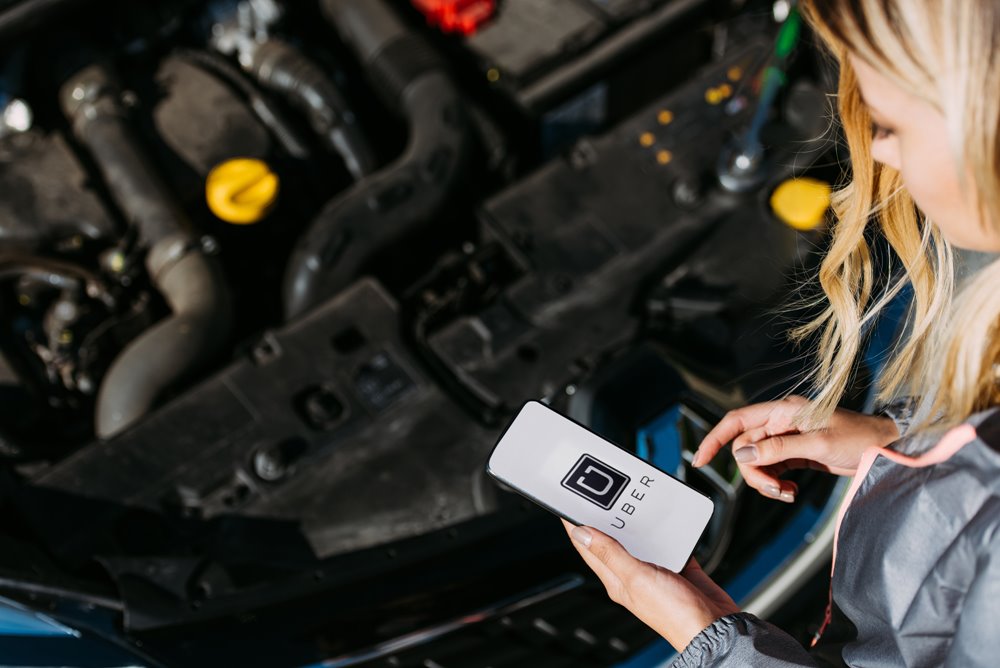
An Uber accident near McGhee Tyson Airport can raise an important insurance question: what was the driver’s app status when the crash occurred? That status can determine which policy applies and how much coverage may be available.
McGhee Tyson sits in Alcoa and functions as the region's airport, which concentrates a particular mix of traffic into a small area. Rideshare pickup and drop-off, rental car movements, shuttle vehicles, and private collections all compete for the same lanes.
The drivers involved are disproportionately unfamiliar with the layout. Someone collecting a passenger for the first time, or driving a rental off the lot onto US-129, is making decisions on a road they do not know while looking for signage.
US-129, the Alcoa Highway, compounds it. The airport feeds directly onto a high-speed corridor where local access movements mix with through traffic running considerably faster.
For injuries involving a passenger vehicle rather than a rideshare vehicle, a car accident lawyer in Alcoa can also review the circumstances and insurance coverage involved.
Rideshare insurance is not one policy but a sequence of them, and which applies depends on what the driver was doing. Tennessee's Transportation Network Company Services Act, codified at Tenn. Code Ann. § 55-12-141, sets out three periods:
A passenger injured while en route from the airport is usually in the strongest position of the three, since this period carries the highest statutory minimum, though the specific policy terms still govern the details. One point worth noting: under § 55-12-141(f), this platform coverage in Tennessee is not contingent on the driver's personal insurer first denying the claim.
Establishing which period applied is a records question. Trip data held by the rideshare platform will show it, and that data is far easier to obtain while a claim is current. A rideshare accident lawyer in Alcoa can examine those records alongside the applicable policies.
Personal auto policies commonly contain a commercial use exclusion, which can remove coverage entirely while a vehicle is being used to carry passengers for payment. That is the mechanism by which a driver who believed they were insured discovers they were not.
The exclusion matters to passengers and other road users too, not only to the driver. Where the driver's personal policy excludes the activity and the platform's coverage does not reach the situation, the available insurance can be much thinner than the vehicles involved suggest.
This is a policy reading exercise rather than an argument. The terms either exclude the use or they do not.
It is worth being explicit about a question this post deliberately leaves open. Whether a rideshare company is legally responsible for the conduct of a driver, as opposed to whether its insurance responds, is a separate issue that depends on doctrines this post does not attempt to resolve.
Those are questions for a lawyer looking at your facts, and any confident general answer should be treated with caution. What can be said plainly is that identifying every policy in play is the first practical step regardless of how that question is eventually answered.
Rideshare claims are unusually document-dependent, and the useful material is easiest to capture immediately. Worth recording at the scene or shortly after:
A passenger who leaves the scene with nothing but a memory of the ride is relying on records held entirely by other parties. Ten minutes of photographs change that position substantially.
Passengers overlook the policy most likely to help them. Uninsured and underinsured motorist coverage on your own auto policy can respond to injuries suffered as a passenger in someone else's vehicle, including a rideshare vehicle.
In Tennessee, insurers are required to include UM/UIM coverage equal to the policy's bodily injury liability limits under Tenn. Code Ann. § 56-7-1201, unless the named insured rejects that coverage in writing. Whether you hold it, and at what limits, is a question of reviewing the policy rather than remembering what you selected.
This matters most where the available rideshare coverage under Tenn. Code Ann. § 55-12-141 turns out to be thinner than expected for the period in question or where another driver caused the crash and carried only the statutory minimum limits.
| Situation at the time of the crash | Practical effect |
| App off, personal use | The driver's personal policy is the starting point |
| App on, waiting for a request | Platform coverage may apply, typically at lower limits |
| En route to collect, or passenger on board | Platform coverage is typically at its highest, subject to the policy terms |
What Determines Coverage After an Uber Accident Near McGhee Tyson Airport?
Generally, the driver's app status at the moment of the crash, because coverage differs depending on whether the app was off, on, and waiting, or engaged on a trip.
Can a driver's personal insurance refuse the claim?
It may. Personal auto policies commonly contain a commercial use exclusion that can remove coverage while the vehicle is carrying passengers for payment.
What should a passenger do at the scene?
Screenshot the trip in the app and photograph the vehicles and location, because that record fixes the trip status while it is still available.
The name on the windscreen tells you very little about what coverage exists, and passengers routinely assume more protection than the policies actually provide.
If you have doubts after a rideshare crash in Tennessee, Fox & Farmer offers a free consultation. You can reach the firm through its contact page.
Last reviewed: September 2026
This post was reviewed by Steve E. Fox, licensed in Tennessee since 1992.
Content is provided for informational purposes only and does not constitute legal advice. Consult a licensed Tennessee attorney for guidance specific to your situation.

Tennessee’s noneconomic damage cap, outlined in Tennessee Code Annotated § 29‑39‑102, limits recovery for intangible...

Slip and fall injuries happen in an instant, but the legal claim that follows is...

Getting your driver's license is a step towards adulthood and freedom. However, in 2019, there...