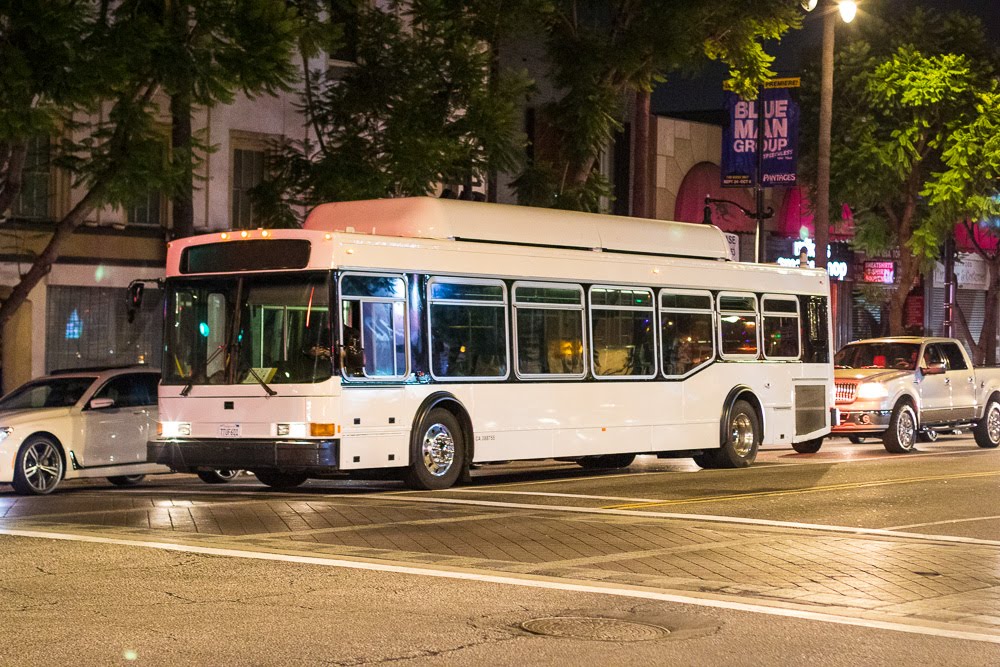
Bus accident claims in Tennessee can differ significantly from car accident claims, particularly in insurance coverage and who operates the bus. A claim involving a private motorcoach company may follow different rules than one involving a public transit agency.
These distinctions can affect filing deadlines, where a lawsuit may be brought, and what compensation may be available.
Regulated for-hire passenger carriers do not operate on ordinary passenger-vehicle limits. Tennessee requires for-hire carriers of eight or more passengers to carry at least $1,000,000 in liability coverage (Tenn. Code Ann. § 65-15-116), and the Department of Safety’s schedule of limits sets higher minimums by seating capacity.
Under Tenn. Comp. R. & Regs. 1340-06-01-.07(2), those minimums are $5,000,000 for vehicles with 16 or more seats and $1,500,000 for vehicles with 15 seats or fewer. Interstate motorcoach operators are also subject to federal financial-responsibility requirements under 49 C.F.R. Part 387.
Compare that to Tennessee’s $25,000 per-person minimum for an ordinary driver. For a seriously injured passenger, the difference can mean a claim limited by the injuries rather than by the policy.
Three cautions apply. First, these are minimums, not the coverage actually carried, and the only way to learn what a particular operator holds is to obtain the policy. Second, not every vehicle that carries passengers is a regulated for-hire carrier. School buses, church vans, hotel shuttles, and similar operations may fall under different rules. Third, public operators are treated differently, as the next section explains.
This is the first question rather than a detail. A privately operated motorcoach, charter, or shuttle is an ordinary commercial defendant.
Claims against a city, county, or local transit authority fall under the Governmental Tort Liability Act (GTLA). Immunity is removed only in defined circumstances, and negligent operation of a motor vehicle is one of them (Tenn. Code Ann. § 29-20-202). Once a claim qualifies, several rules change:
Those caps are the real contrast with the $5,000,000 minimum a private motorcoach carrier must carry.
Vehicles operated by a state agency, such as some state university buses, are generally handled through the Tennessee Claims Commission rather than the GTLA, under a separate set of procedures and limits.
The filing period is not what differs. A GTLA action must be commenced within twelve months (§ 29-20-305(b)), essentially the same as the one year for ordinary personal injury claims (§ 28-3-104). The change is to the forum, the available damages, and the rights of the parties, not to the clock. A missed deadline can bar the claim entirely, so it should be treated as running from the day of the crash.
School transport, contracted services, and vehicles run by a private company under a public contract can each fall differently. Establishing who actually owned, operated, insured, and controlled the vehicle is work for the first weeks of a case.
Some legal resources assert that buses owe passengers a heightened duty of care as common carriers. Whether and how Tennessee law applies that standard requires careful review of relevant state authority and the facts of the case.
That distinction matters because a rule recognized in another state may not apply in the same way in Tennessee. An attorney can assess the applicable standard based on the circumstances.
What remains central is whether negligence by a driver, operator, or another responsible party caused or contributed to the passenger’s injuries.
People injured in other transportation incidents may also have different coverage questions, including those involving a rideshare accident in Chattanooga.
Several parties can contribute to a bus injury, and Tennessee allocates responsibility among them individually. Under Tenn. Code Ann. 29-11-107, each defendant is severally liable only for its own percentage of fault.
Beyond the operator and the driver, the parties worth investigating include another motorist whose conduct caused or contributed to the collision, a maintenance contractor responsible for the vehicle's condition, a manufacturer where a component failed, and a property owner where boarding or alighting conditions contributed.
Because fault can also be allocated to a nonparty under subsection (d), identifying everyone involved protects the recovery rather than merely completing the picture.
US-27 runs through downtown Chattanooga as an urban freeway with closely spaced ramps, creating merging conflicts for large vehicles that need more room to maneuver.
The I-24 Ridge Cut at Missionary Ridge adds curves and grades to heavy traffic, while the I-75 and I-24 interchange concentrates traffic from multiple states. Tourism around downtown and the riverfront also brings shuttle and charter buses into busy streets with substantial pedestrian activity.
Serious injuries may require treatment at Erlanger Baroness Hospital, a Level I trauma center in southeast Tennessee. Medical records can help document the injuries, treatment, and long-term effects of a collision.
If you were injured, a Chattanooga bus accident lawyer can review the circumstances, identify potentially responsible parties, and explain the options for pursuing a claim.
| Private passenger carrier | Publicly operated transit | |
| Minimum coverage | 5,000,000 dollars for 16 or more seats, 1,500,000 for 15 or fewer. | Governed by the statutory caps rather than carrier minimums. |
| Jury | Available. | No jury under Tenn. Code Ann. 29-20-307. |
| Punitive damages | Available in qualifying cases. | Not recoverable against a governmental entity. |
How Does a Bus Accident Claim in Tennessee Differ From a Car Accident Claim?
Passenger carriers are subject to far higher minimum coverage under Tenn. Comp. R. and Regs. 1340-06-01-.07, and the operator may be a governmental entity with different procedures.
Is the Filing Deadline Different for Claims Against Public Transit Operators?
No. The period is twelve months under Tenn. Code Ann. 29-20-305(b), essentially the same as the ordinary injury period. What changes is the forum and the rights.
Can I Recover Punitive Damages in a Public Transit Injury Claim?
Not against a governmental entity. Against a private operator, they remain available in qualifying cases.
The company or agency operating the bus can affect available insurance coverage, filing requirements, and potential compensation. Knowing how these factors apply to your case can help you protect your rights after an accident.
Fox & Farmer offers free consultations to discuss your situation and explain your legal options. Visit our contact page or call 865-531-9400 to speak with the firm.
Last reviewed: October 2026
This post was reviewed by Steve E. Fox, licensed in Tennessee since 1992.
Content is provided for informational purposes only and does not constitute legal advice. Consult a licensed Tennessee attorney for guidance specific to your situation.

In Tennessee, how much you can recover after an accident often comes down to a...

An Uber accident near McGhee Tyson Airport can raise an important insurance question: what was...

When an out-of-state driver causes an accident in Tennessee, insurance coverage can become more complicated....