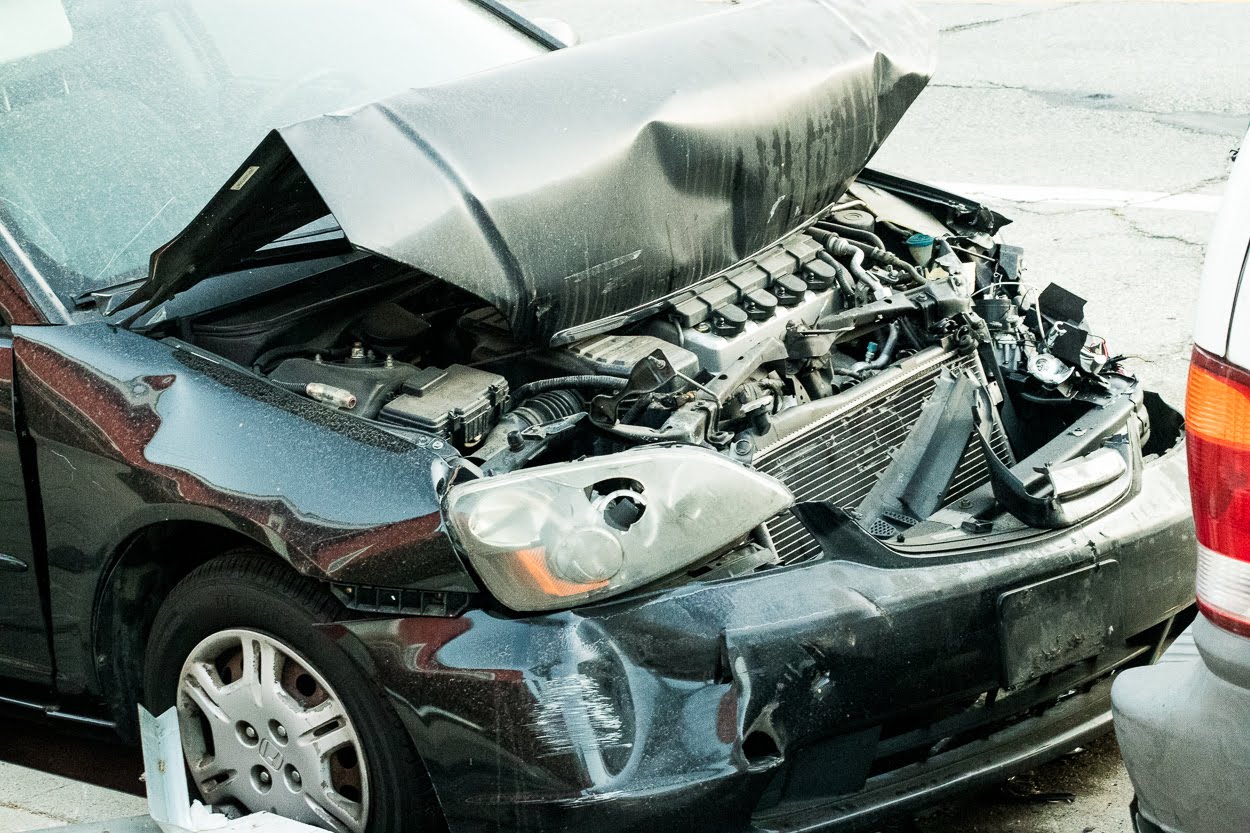
Fault in a parking lot accident in Knoxville, TN usually turns on which driver failed to use reasonable care: the driver backing out of a space, the driver cutting across empty rows, or the driver moving too fast down the main lane. Tennessee's comparative fault rule then decides whether an injured person can recover and how much.
Holiday shopping draws drivers to the shopping centers along Kingston Pike and around Turkey Creek, the retail area in west Knox County that sits partly in Knoxville and partly in Farragut. A driver hunting for an open spot is not always watching the lane in front of them.
Across all roads, Knox County recorded 10,031 crashes in 2025, including 50 fatal crashes and 2,696 injury crashes, according to the Tennessee Department of Safety and Homeland Security. Those figures cover the whole county, not parking lots alone.
Every driver in a Knoxville parking lot owes a duty of reasonable care, and insurers often start by looking at the driver who was backing out of a space or pulling from a feeder row into a main travel lane. Fault can still be shared, because the other driver may have been speeding, distracted, or cutting diagonally across open spaces.
Insurers look at the lot layout, each car's direction, and where the damage landed. Common scenarios tend to play out like this:
| Scenario | Where insurers often start on fault | Evidence that matters most |
|---|---|---|
| One car backing out, one car in the travel lane | The driver backing out | Damage location, store camera footage |
| Two cars backing out at the same time | Often shared between both drivers | Witness statements, timing of each car's movement |
| Car pulling from a feeder row into the main lane | The driver leaving the feeder row | Lot markings, stop signs, lane arrows |
| Car cutting diagonally across empty spaces | The driver cutting across | Photos of the lot layout, the path of travel |
| Car hitting a shopper in the lane | Usually the driver | Video, lighting, the shopper's location |
A Knoxville car accident lawyer can review the specific facts, because a few seconds of video often changes how the insurer sees a claim.
Tennessee follows modified comparative fault, a rule set by the Tennessee Supreme Court in McIntyre v. Balentine, 833 S.W.2d 52 (Tenn. 1992). The court held that a person may recover so long as their negligence remains less than the other driver's negligence, with damages reduced in proportion to their own share of fault.
An injured driver can recover only if they were less than 50 percent at fault. A driver found 20 percent at fault for a lot collision would see the recovery reduced by that 20 percent.
See our guide on how fault percentages work in Tennessee.
Yes, in many cases. Tennessee's crash reporting statutes apply to crashes "upon highways and the premises of any shopping center, trailer park or any apartment house complex, or any other premises that are generally frequented by the public at large." A busy store lot often fits that language.
The rules that follow from it include:
A police report made at the time can matter later if the other driver tells a different story.
Parking lot claims are often decided by small details that disappear quickly. The most useful steps after getting medical care include:
Tennessee's general deadline to file a personal injury lawsuit is one year after the injury, under Tenn. Code Ann. § 28-3-104(a)(1). A claim for vehicle damage has three years under § 28-3-105.
Yes. Tennessee negligence law applies to parking lot crashes, and an injured driver, passenger, or shopper may bring a claim against the driver who caused it.
No. The driver backing out often carries more fault, but a speeding or distracted driver in the travel lane can share the blame.
The general deadline is one year after the claim accrues, usually the date of the injury. Claims for vehicle damage have three years.
If you were hurt in a Knoxville parking lot, you can contact Fox & Farmer Attorneys at Law for a free consultation at 865-531-9400 to speak with an attorney. You owe no fee unless you win.
Last reviewed: November 2026
This post was reviewed by Steve E. Fox, licensed in Tennessee since 1992.
Content is provided for informational purposes only and does not constitute legal advice. Consult a licensed Tennessee attorney for guidance specific to your situation.

A car accident in Sweetwater can turn into a much bigger problem than the crash...

A car accident on the Tennessee-Virginia state line raises a question before any other: which...

Working out where to file an injury lawsuit in Oak Ridge, TN, often starts with...