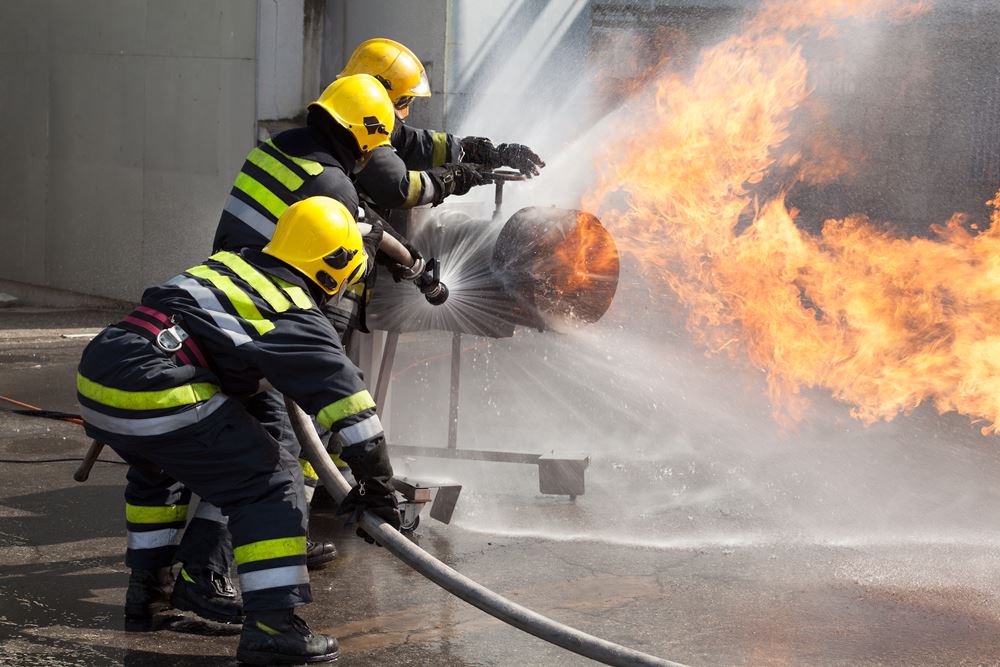
Scott County, TN (November 16, 2026) – Flames were reported throughout a mobile home on Day Lane in Scott County when the first call came in at 9:04 p.m. on Sunday, November 15.
As the fire grew, Scott County Fire and emergency units from several neighboring communities were called in to help, and others were placed on standby.
Shortly after 10 p.m., medical help was requested for one of the people working the fire. It was not immediately known how seriously that person was injured.
The cause of the fire has not been released, and the investigation is ongoing.
Our thoughts are with the household affected by the fire and with the injured first responder.
Firefighters and rescue workers who are hurt on the job in Tennessee usually start with workers' compensation. Volunteers are generally not covered by the state's workers' compensation law, but volunteer firefighters and rescue personnel are treated as covered employees under a special provision.
That matters in rural counties, where many departments rely on volunteers. Paid firefighters may also be covered through the city or county that employs them, depending on whether that local government has opted into the system. Workers' compensation can pay for medical treatment and part of the income lost while recovering, and it does not depend on proving anyone was at fault.
The deadlines are short. An injured worker should give written notice to the department or employer within 15 days of the injury. If benefits are not paid voluntarily, a claim generally has to be filed within one year. Tennessee also recognizes that some on-duty harm is not physical. A 2023 law created a presumption that post-traumatic stress disorder diagnosed in a firefighter after responding to traumatic calls is connected to the job.
Workers' compensation is usually the only claim available against the department itself, but it is not always the end of the road. Tennessee follows a long-standing rule that generally blocks firefighters and police officers from suing a person whose ordinary carelessness caused the emergency they were called to handle.
However, that rule has limits. It does not shield conduct that is intentional, malicious, or reckless. A separate claim may also be possible when an injury comes from something other than the emergency itself, such as a passing driver who strikes a fire truck or defective protective gear.
A personal injury lawyer can help sort out whether a claim exists beyond workers' compensation and how the two would work together, since a workers' compensation insurer may seek repayment from any outside recovery. It is important to keep copies of incident reports, medical records, and notice forms that can make both processes easier to manage.
On-duty injuries can raise questions that go beyond a standard workers' compensation claim. Our team at Fox & Farmer can explain how Tennessee's coverage rules for paid and volunteer firefighters may apply to your situation and which deadlines matter most.
To learn more, call Fox & Farmer at 423-531-9400 to talk it over. We are here to clear your doubts and help you move forward.
Note: This post is based on information obtained from publicly available secondary sources. While we strive to ensure the accuracy of the information presented, Fox & Farmer has not independently verified all details of the incident reported. If you notice any inaccuracies or missing information, please contact Fox & Farmer so we can promptly review and update the content.
Disclaimer: The content of this post is provided for general informational purposes only and should not be interpreted as legal or medical advice. Reading this post does not create an attorney-client relationship with Fox & Farmer. If you have been injured in an accident, seek appropriate medical care and consult a qualified attorney regarding your legal options. Any images included are for illustrative purposes only and do not depict the actual accident scene or individuals involved.
Knoxville, TN (November 5, 2026) – Emergency crews responded to a wreck on Interstate 40...

Kingston, TN (November 10, 2026) – A motorcycle and a commercial vehicle were involved in...
Memphis, TN (October 4, 2026) – A man was critically injured on Saturday afternoon, October...